Posted on September 25 2025
Toyota Kirloskar Motor Reiterates its Commitment to Sustainability, Marking the World Environment Health Day 2025
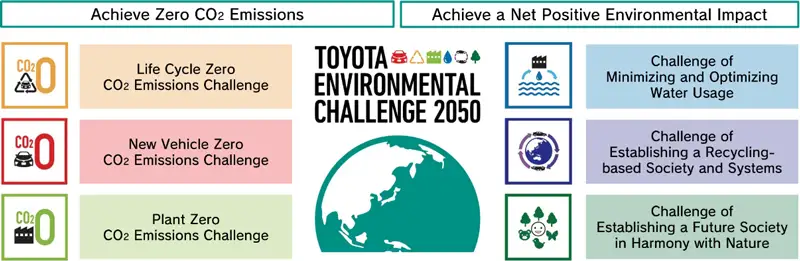
Bangalore, 25th September 2025: Marking World Environment Health Day, Toyota Kirloskar Motor (TKM) today reaffirmed its long-standing commitment to advancing environmental sustainability and social well-being in India. Guided by the global Toyota Environmental Challenge 2050 (TEC 2050) consisting of six challenges, announced in 2015, TKM continues to reduce its carbon footprint accelerating the transition by going beyond products, embedding sustainable practices in manufacturing operations and across their entire value chain. Further, such eco efforts include conserving natural resources, and enriching communities through impactful projects.
World Environment Health Day serves as a reminder of the inseparable link between environmental quality and public health. By promoting cleaner air and water, effective waste management and pollution control, the day emphasizes that safeguarding the environment is central and in line with this, TKM’s sustainability initiatives not only target reduced emissions and resource conservation but also contribute to healthier communities.
Aligned with its principle of ‘Respect for the Planet’, TKM has embedded innovation and measurable goals into its product portfolio, manufacturing processes, and community outreach programs, ensuring tangible and scalable outcomes.


Leadership Speak
Expressing his views, Mr. B. Padmanabha, Executive Vice President & Director – Manufacturing, Toyota Kirloskar Motor, said:
“At TKM, sustainability is the very foundation of how we operate, innovate, and grow. Over the past year, we have advanced decisively across multiple fronts sustaining 100% renewable energy at Bidadi operations, promoting decarbonization across value chain and moving towards a circular economy. Through our efforts, we have effectively touched the lives of millions through our far-reaching community programs. Together with our partners, stakeholders, and employees, we are helping define the blueprint of a sustainable future for India and beyond.”
Eco-efficient Manufacturing & Resource Stewardship
At its Bidadi plants, TKM is moving steadily towards its Net Zero Carbon in Manufacturing Operations by 2035, while also committing to achieve net zero across the entire value chain by 2050.
Key highlights include:
- Renewable Energy Transition: TKM has achieved 100% renewable grid electricity, through dedicated solar and wind installations upto 50.4 MW renewable energy capacity. This shift has enabled annual reductions of over 83000 tons of CO₂, supported by adoption of energy-efficient technologies that continue to reduce specific energy consumption year-on-year.
- Water Stewardship: Over 89% of water requirements for production are now fulfilled through recycling and rainwater harvesting. We have 18 rainwater recharge pits along with two rainwater harvesting ponds of combined 51000 m3 capacity. Using membrane bio reactors (MBRs) and reverse osmosis (RO) technologies, nearly 60% of wastewater is treated and redirected into manufacturing.
- Waste Circularity: TKM has achieved Zero Waste-to-Landfill status across all its plants, with an over 96% recycling rate. Beyond internal waste, the company supports India’s Vehicle Scrappage Policy by developing authorized recycling channels for end-of-life vehicles, enabling circularity from production to post-consumer use.
- Biodiversity & Carbon Sequestration: Through the Toyota Green Wave Project, TKM has a green cover of over 112.4 acres, creating habitats for 790+ species of flora and 410+ species of fauna. Miyawaki plantations have already sequestered 8118 tons of carbon, demonstrating nearly 30.86 tons per acre compared with conventional plantation methods (8.45 tons/acre).
The 25-acre Ecozone experiential learning hub continues to serve as a powerful community platform for environmental education, empowering over 40,000 students and stakeholders to become eco-champions.
Decarbonizing the Value Chain
Beyond manufacturing, TKM has strengthened green supply chain initiatives, introducing stringent supplier ESG compliance frameworks and green logistics operations to reduce hidden lifecycle emissions. Its eco-dealership networks further integrate sustainability across customer touchpoints, reducing environmental impact while enhancing stakeholder experience.
Strengthening Carbon-Neutral Pathways
Under its multi-pathway approach to carbon neutrality, TKM continues to provide mobility solutions across electrified technologies; Hybrid Electric, Plug-in Hybrid Electric, Fuel Cell Electric, and Battery Electric Vehicles—suited to India’s unique energy landscape. The company is also advancing Electrified Flex-Fuel Vehicles (EFFVs), integrating India’s biofuel goals with strong hybrid systems to deliver enhanced efficiency and lower emissions. During 2023, TKM unveiled its prototype of Electrified Flex Fuel Vehicle built-on the most admired Innova Hycross and is designed to be compatible with India’s higher emission norms, making it the world’s first Prototype of BS 6 (Stage II) Electrified Flex Fuel Vehicle.
In June 2025, TKM announced a strategic MoU with Bengaluru-based Ohmium International to co-develop scalable Green Hydrogen-based integrated power solutions. This collaboration underscores the company’s intent to broaden hydrogen applications beyond mobility into decentralized power and clean energy ecosystems. Key focus areas include microgrids, data centres, and remote locations requiring resilient, low-carbon energy solutions. Thus, this collaboration represents a significant step forward in realizing a hydrogen-powered future for the country.
Other significant milestones include the Toyota Mirai FCEV pilot projects in India, a feasibility study in collaborations with various stakeholders including Indian Institute of Science (IISc) Bangalore, International Center for Automotive Technology (ISMA), etc., and supply of fuel cell modules for hydrogen-powered commercial vehicle prototypes.
Community-Centric Sustainability
TKM has further strengthened its social impact by addressing pressing community needs through strategic CSR programs:
- Water Security: In February 2025, TKM inaugurated one of the water purification units in Mysore district, directly benefiting nearly 3,98,870 people with access to safe drinking water. With six-stage purification, real-time monitoring, and solar backup, these units provide a combined 7,500 liters/hour capacity for communities.
- Rural Transformation: Through Project Jeevan Dhara, launched in January 2025 with Watershed Organization Trust (WOTR), TKM is implementing watershed management across 5,322 hectares in nine villages, positively impacting 11,026 people across 2,063 households.
- Ecosystem Rejuvenation: Adoption of Abbanakuppe Lake has enhanced water quality, biodiversity, and recreation, directly benefitting 8,000 residents across six villages.
- Healthcare: Through expanded healthcare access via mobile clinics and telemedicine, underserved communities are being reached.
Overview of TKM
|
Equity participation |
Toyota Motor Corporation (Japan): 89%, Kirloskar Systems Limited (India) : 11% |
|
Number of employees |
Over 6,500 |
|
Land area |
Approx. 432 acres (approx.1,700,000 m2) |
|
Building area |
74,000 m2 |
|
Total Installed Production capacity |
Up to 3,42,000 units |
Overview of TKM 1st Plant:
|
Established |
October 1997 (start of production: December 1999) |
|
Location |
Bidadi |
|
Products |
Innova HyCross, Innova Crysta, Fortuner, Legender manufactured in India. |
|
Installed Production capacity |
Up to 1,32,000 units |
Overview of TKM 2nd Plant:
|
Start of Production |
December 2010 |
|
Location |
On the site of Toyota Kirloskar Motor Private Limited, Bidadi |
|
Products |
Camry Hybrid, Urban Cruiser Hyryder, Hilux |
|
Installed Production capacity |
Up to 2,10,000 units |
*Other Toyota Models: Glanza, Rumion, Urban Cruiser Taisor
**Imported as CBU: Vellfire, LC 300
For Any Further Queries, Please Contact:
| Toyota Kirloskar Motor Pvt. Ltd. | Lewis Value 360 |
|---|---|
|
Rani K R Email : ranikr@toyota-kirloskar.co.in |
Khyati Nirav Mehta Email : khyati@lewisvalue360.com |
|
Anusha Banerjee Email :anusha@lewisvalue360.com |